Showing posts with label garden. Show all posts

A New Year Brings New Things

Happy New Year!

This year, I have set some lofty goals for both my garden and my business. Both are going to require some changes to the way I've been doing things. But the possible outcomes have me incredibly excited!

Starting with my garden...ah, the garden. It is my absolute favorite place to be. While I love sewing, there is something incredibly peaceful about being in the garden. I don't mind the normal garden chores - I covet that time to myself. Threatening to make other people help weed the garden sure buys you some peace.

Last year, I had some pretty miserable crop failures across the board. We had a long, cold and wet spring followed by a summer that never really got "hot". Sure, it got into the 80s, but we normally have stretches of seriously hot weather, with temps in the upper 90s. By July, we can normally guarantee that water restrictions have started. Not this past year. It rained practically every.single.day.

My garden is right next to a bog that developed over a period of years. We've talked about installing a french drain to help alleviate the problem, but the toads lay their eggs in the bog in the spring. I don't want to mess around with their habitat, so I am working around the bog instead of draining it.

My goal last year was to grow 500 pounds of food. I barely grew 1/5th of that goal. The cold weather and constant rain brought fungus and root rot, and a late visit by another groundhog finished off the fall crops.

So this year, it is ON. 

I reinforced the fencing around the garden to prevent it from getting back in. We're clearing some of the brush behind the fence to keep it from climbing into the garden as well. 

I decided to also give sweet potatoes a whirl this year. I couldn't get them to sprout to save my life last year, so I started them super early. I have no idea where I'm going to put them yet, though. They're related to the morning glory, and the vines can be quite invasive.


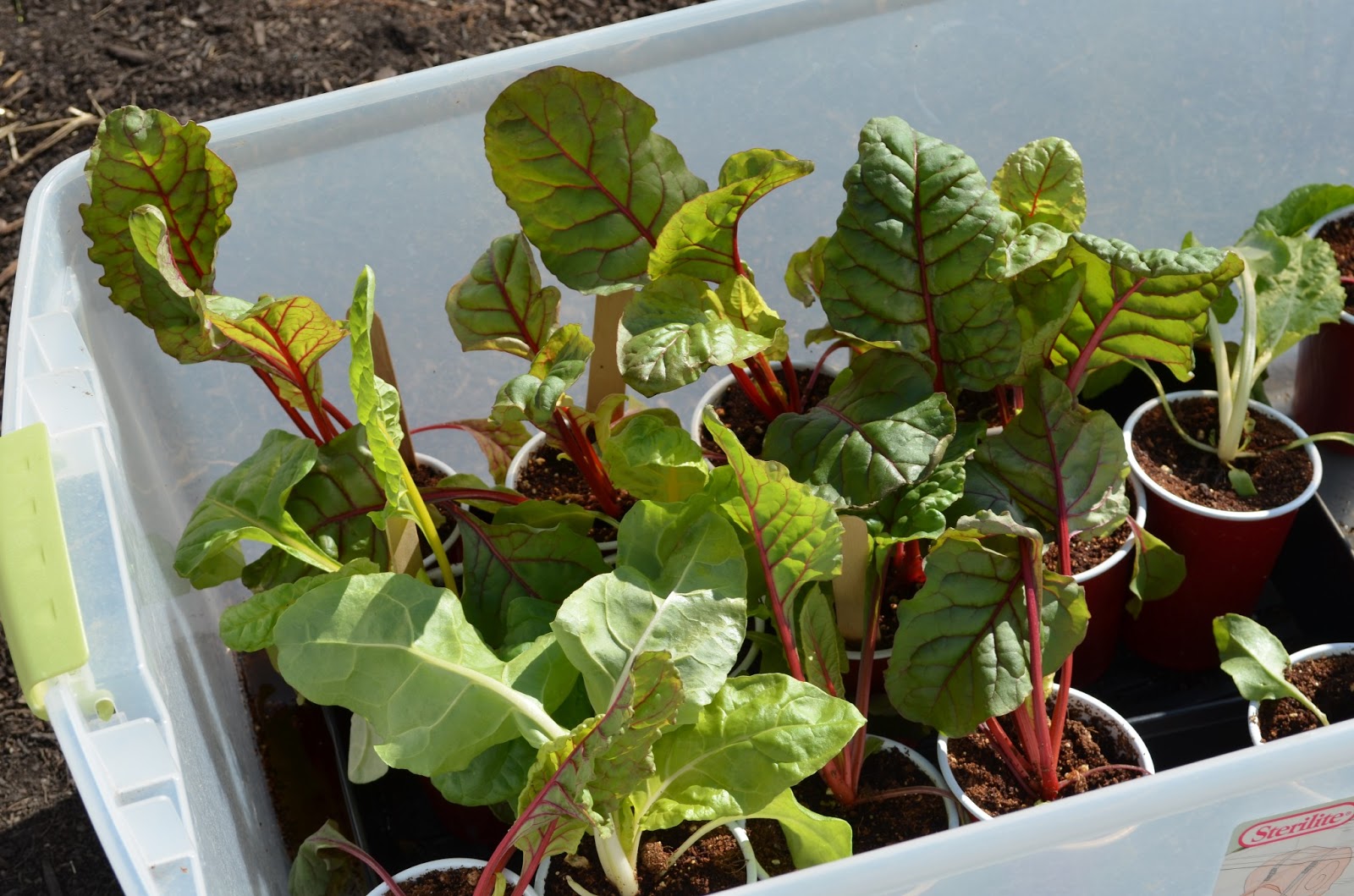
I've also got the beginnings of my spring crops started. They'll be going out under a row cover in a few weeks. I have 20 broccoli plants and 20 swiss chard plants growing strong.


I also want to give leeks a go this year. I just sowed them a couple of days ago, so not much to see there yet.

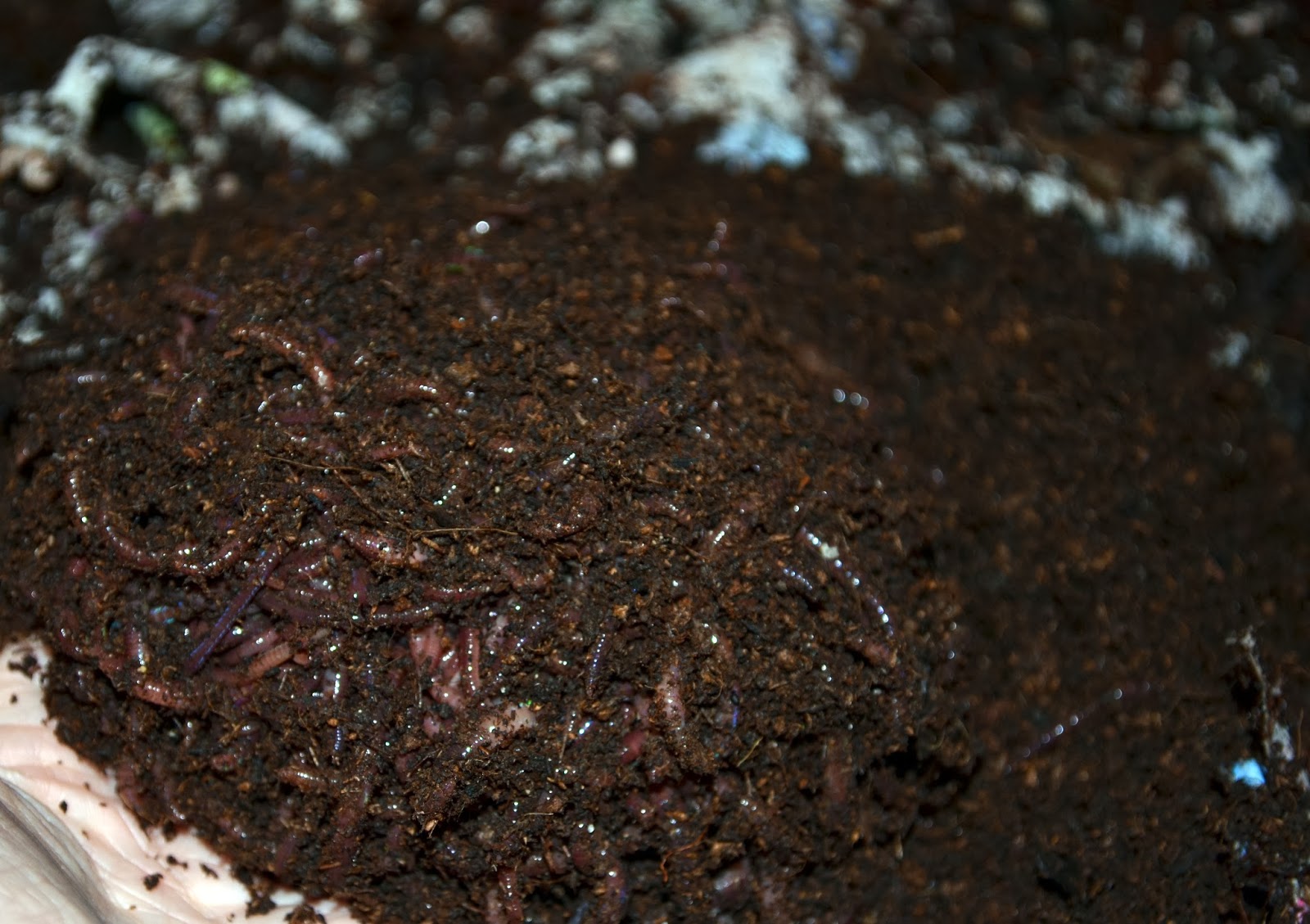
Quite possibly the most exciting news - the worm castings were ready to harvest! I got 6 pounds 8 oz of worm castings in 5 weeks. Snowflakes are all MUCH happier. There were a TON of eggs and wee tiny baby worms. Production of castings should speed up now that there is a population boom.

6 pounds 8 oz of worm castings

Wee baby worms!

I spent the day outside in the garden cutting honey suckle vines off the blackberries and I uncovered the strawberry plants. They're showing signs of new growth, and I didn't want to suffocate them with the mulch. 

Garden in January

Have you started prepping your garden for spring?


Amazing Adventures in Vermicomposting

(Warning - this post is not for the squeamish).

My friend Rainey got me hooked on Amazon lightening deals over the holidays. I checked them daily, even when I was done with my shopping, just to see what amazing deal was going to come up next.

I was ecstatic when a worm bin came up. (I know, you're excited too!) I jumped at the chance to get one on sale, but they were sold out before I could definitely make up my mind. See! Other people like worms too!

What is a worm bin and what is vermicompost you ask? In a nutshell - a worm bin is an indoor composter and vermicompost is worm poop. But, it isn't just any poop. It is the gold standard of poop! 

Vermicompost has 5x more nitrogen, 7x more phosphorus, and 11x more potassium than normal garden soil and is full of beneficial microbes. It doesn't burn plants like normal manures do, and doesn't need to be composted before use. (For the non-gardeners out there - horse and cow manure contain a ton of nitrogen and are "hot". If applied to plants without composting, it can burn the plants' roots.)

During the winter, our outdoor compost pile doesn't do much. I wanted to do something with all of the kitchen scraps we create over the winter (about 10 pounds a week!). So I ordered the bin, and a pound of red wiggler worms.

My oldest daughter named all of our worms "Snowflake", partly because it is winter, and partly because like snowflakes, no two worms are alike.

We received a pound of red wigglers, and added them to their new worm home. All seemed to be going swimmingly until I noticed a population boom of white mites. 


I knew going into this that it was very possible that other creepy crawlies would move in to our worm habitat, but I didn't know if white mites would do any harm to my beloved Snowflakes. I asked Dr. Google about the mites and read,

"White mites do not pose a danger to red worms. They feed on dead and dying worms."

"dead and dying worms"

Uh-oh.

In my rookie worm owning-ness, I'd overfed my poor Snowflakes. They supposedly can eat half a pound of food waste a day, and I'd been...making sure they weren't starving. In my doing so, I'd overfed them. Not only that, I'd also neglected to add new bedding to their bin when feeding them, so it was really wet.

Not good, Batman. Not good at all.

You'd have thought I was performing emergency surgery in my kitchen as fast as I ripped that worm bin apart. My 5 year old daughter was my assistant, and very politely (and quietly) said, "Mama, it smells like a zoo in here."

Now, I will be the first to say that I generally don't mind odors and smells that others may find unpleasant. I do enjoy the smell of a zoo. Sheep pens and horse stalls don't bother me. I am happiest when elbow deep in muck in the garden. Sweaty kids smell like puppies, sunshine and rainbows. 

But this smell...let's just say, there are no words in the English language to describe it. It had to be one of the absolute worse smells I've ever come across, and that is saying something.

This particular bin I have is comprised of stacked trays. As they're filled, a new tray is added. I'm still working on my first tray, which is stacked on top of a drip pan. The liquid in the picture is leachate. Normal worm bins have this as well, mine just also contains a good handful of dead worms due to my carelessness in feeding. If you look super closely, you can see a bunch of dead worms in that ghastly liquid, as well as a small pile of muck and an assortment of dead worms scattered on the pan.

Leachate is NOT worm tea. (Worm tea is "brewed" by soaking vermicompost in water, and using that to feed plants.) Leachate should be disposed of, especially if it smells bad (which in this case, is a significant understatement.)


I pulled everything apart and gave it a good scrubbing and set it outside in the sun. I then set to work on creating a new bed for my precious Snowflakes.

I was also unaware that I was supposed to turn the contents of the worm bin, similar to a compost pile. This helps to prevent an anaerobic environment. 

I lined a new bin with new paper. There are holes in the bottom of the bins which allow the worms to move up when I add a new tray on top. In the case of the previous tray, they'd composted the original lining, and fell through the holes to their doom.


Then I added LOTS of new bedding. SO MUCH BEDDING. I recycled my kids' homework and tore it into strips.


On top of that, I added everything from the previous bin, and mixed it up. 


Even with all of the rookie mistakes, they're definitely doing their job. Here's what the bin looked like a couple of weeks ago - 


They're also working on making new baby Snowflakes! Those 2 golden ball thingys are eggs!


Are you vermicomposting? Or are you pretty much horrified by the concept? 


Garden Fail

It's been said that Thomas Jefferson kept detailed notes about his successes and failures in his garden at Monticello. It's also been said that he was one of the only gardeners to admit to as much failure as he had. Drought was often the cause of crop failure, at least according to A Rich Spot of Earth, a book about Jefferson's garden at Monticello (which is one of my favorite places to be).

So in honor of TJ, here's a post about a whole bunch of garden fail.

The past few weeks have been unseasonably cold. Our normal last frost date is April 15, and yet we got a frost a few days ago (late April). The last 2 years have had very warm springs, and one could say I was spoiled by how warm the springs were.

This year, I set out my tomatoes on April 9, very early. I started them early, so they were monsters and needed to go outside. The same goes for my peppers.

Well, let's just say that I learned a very important lesson in gardening this year. A late frost handed me my hat, so to speak. About 10% of my crop suffered frost damage, and I lost a couple tomato plants.


On top of that, at the beginning of the month, we had above average temperatures. Temps were well into the  high 80s - low 90s for almost an entire week, which caused my broccoli to button. (Buttoning is when broccoli forms a small head, much like a floret.) So I'll try broccoli again in the fall when things cool down.


Thomas Jefferson said the success of one crop outdid the failure of another. I purchased a few starts to replace the ones I'm going to lose due to frost damage, and am keeping them inside at night until early next week. Here's hoping that I have some successes in the garden this year to outweigh the loss of the broccoli and tomatoes.


The Songs Have Started

There is a boggy area in my backyard right next to my garden. Every year, winter snow and rain fills the bog. In the spring, toads frolic to my backyard to make lots of wee toad babies. (Did you know that about 80% of male toads return to the place where they were spawned during mating season?) Their croaking starts gently, and by the time spring is in full swing, it's incredibly loud. 


Toad hanging out in my garden.

Bog

When the songs start, I know spring is coming. I took said songs as a sign to build a row cover / small hoop house. It's covered in 6 mil plastic for now, and when it heats up outside the plastic will be replaced with tulle.

I bought an outdoor thermometer to monitor the temperature, and it was 80*F under the cover. Our 10 day forecast is pretty mild, so I decided to take a chance and planted my swiss chard today. It has been hardening off for a little over 2 weeks.

5.5 week old swiss chard ready for the garden

The row cover - PVC frame covered in 6 mil plastic sheeting


One of the really cool things about chard is that the roots are the same color as the leaves.

Yellow swiss chard


My goal this year is to grow 500 pounds of food for my family. So far, I'm at 4 ounces (I harvested my basil plants for a lasagna). I have 16 chard plants under the row cover, and sowed spinach, arugula, and radishes.

Swiss chard planted

Do you like swiss chard? Is the weather hospitable enough for you to get gardening?


How To: Build a Pea Trellis

I garden for a variety of reasons. One of the biggest ones is thriftiness - organic vegetables are incredibly expensive at the grocery store, especially enough to feed 5 people. I also love planting something and watching it grow.

I planted sugar snap peas this year, which is one of the earliest spring crops. They need something to climb on for maximum yield and maximum health of the plant. I didn't want to spend eleven bajillionity dollars on a bunch of stuff for the garden, so I came up with a pea trellis using things I had here at home.

You can use a variety of materials for a pea trellis, including twigs! I'll show you how to build a simple trellis using tomato stakes and cotton string.

What you'll need
- a pair of scissors
- a bunch of cotton string (I got this cone at JoAnn's on sale for $9)
- a bunch of tomato / garden stakes, a few feet high. These are usually about $1 each, cheaper if you get them at the end of the season. 

You'll need enough stakes to have one every 2-3 feet or so. 5 gave me enough for my first row, so I went and grabbed some more for the 2nd row from my garage. (I won't be using these for my tomato plants this year because frankly, they don't work. I'll be building a trellis for them as well.)


I'm a conventional gardener and put in rows. So just adjust if you use raised beds. 

Push 1 stake into the ground every 2-3 feet. I went down about 8" and then compacted dirt around the stake. You don't want them blowing around in a thunderstorm.


Taking your cotton string, tie one end to one of your end stakes. I use a bunch of knots. (DON'T cut your string from the cone yet, otherwise you may not have a big enough piece and that is super irritating.)

Wrap your string around the post you tied the knots to, and then wrap it around the next post in line. Repeat this for as many posts as you have in a row, tying it off at the end. Repeat for any other rows you have. Do this at least 2 more times (depending on the height of your stakes); one in the middle and one towards the soil.


You should have something that looks like this. (Should being the operative word here.)


Step in between 2 of your stakes. Tie one end of your yarn in the middle of 2 of your stakes, then wrap it around each horizontal layer. You're now making the vertical space.


Repeat all the way to the bottom string and tie off. Do the same for the rest of your stakes. Just tie a vertical line in between 2 stakes.

You should now have something that looks like this. Plant your peas according to the directions on your seed packet. Once they come up, they'll grab onto your trellis and cover it.


I'll post pictures once the peas overtake the trellis!


A Berry Good Sign!

My kids could eat their body weight in fruit everyday. The price of organic fruit, especially berries, is nuts. I love to garden, so last year I put in a strawberry patch.

I started with 6 plants and resisted every natural urge to let them flower. (It is recommended that you pick the flowers off of the plants the first year they're in the ground so they put more energy into a good root system instead of into making fruit.)

Those 6 plants sent off runners and made new baby plants. I let each plant form 3 babies, and I removed any additional runners. So this year I have 18 strawberry plants. I went out to weed the bed in preparation for the spring equinox, and found a "berry" good sign!


The presences of earthworms in the garden is a great sign that the soil is happy and fertile, which means healthy plants.

I also spied the plants starting leaf production again. I should start seeing flowers in a few short weeks!


Those weren't the only signs of spring. My chives are coming back in!


The roses are setting leaves.


Walking barefoot around the yard did remind me that we had a little over 3" of snow just 2 days ago. My husband spent the day building an igloo. Sadly, (or not so sadly. I vastly prefer warm weather to cold!) here is all that remains of it.


What is your favorite time of year? Are you planting a garden?