Showing posts with label gardening. Show all posts

Amazing Adventures in Vermicomposting

(Warning - this post is not for the squeamish).

My friend Rainey got me hooked on Amazon lightening deals over the holidays. I checked them daily, even when I was done with my shopping, just to see what amazing deal was going to come up next.

I was ecstatic when a worm bin came up. (I know, you're excited too!) I jumped at the chance to get one on sale, but they were sold out before I could definitely make up my mind. See! Other people like worms too!

What is a worm bin and what is vermicompost you ask? In a nutshell - a worm bin is an indoor composter and vermicompost is worm poop. But, it isn't just any poop. It is the gold standard of poop! 

Vermicompost has 5x more nitrogen, 7x more phosphorus, and 11x more potassium than normal garden soil and is full of beneficial microbes. It doesn't burn plants like normal manures do, and doesn't need to be composted before use. (For the non-gardeners out there - horse and cow manure contain a ton of nitrogen and are "hot". If applied to plants without composting, it can burn the plants' roots.)

During the winter, our outdoor compost pile doesn't do much. I wanted to do something with all of the kitchen scraps we create over the winter (about 10 pounds a week!). So I ordered the bin, and a pound of red wiggler worms.

My oldest daughter named all of our worms "Snowflake", partly because it is winter, and partly because like snowflakes, no two worms are alike.

We received a pound of red wigglers, and added them to their new worm home. All seemed to be going swimmingly until I noticed a population boom of white mites. 

I knew going into this that it was very possible that other creepy crawlies would move in to our worm habitat, but I didn't know if white mites would do any harm to my beloved Snowflakes. I asked Dr. Google about the mites and read,

"White mites do not pose a danger to red worms. They feed on dead and dying worms."

"dead and dying worms"

Uh-oh.

In my rookie worm owning-ness, I'd overfed my poor Snowflakes. They supposedly can eat half a pound of food waste a day, and I'd been...making sure they weren't starving. In my doing so, I'd overfed them. Not only that, I'd also neglected to add new bedding to their bin when feeding them, so it was really wet.

Not good, Batman. Not good at all.

You'd have thought I was performing emergency surgery in my kitchen as fast as I ripped that worm bin apart. My 5 year old daughter was my assistant, and very politely (and quietly) said, "Mama, it smells like a zoo in here."

Now, I will be the first to say that I generally don't mind odors and smells that others may find unpleasant. I do enjoy the smell of a zoo. Sheep pens and horse stalls don't bother me. I am happiest when elbow deep in muck in the garden. Sweaty kids smell like puppies, sunshine and rainbows. 

But this smell...let's just say, there are no words in the English language to describe it. It had to be one of the absolute worse smells I've ever come across, and that is saying something.

This particular bin I have is comprised of stacked trays. As they're filled, a new tray is added. I'm still working on my first tray, which is stacked on top of a drip pan. The liquid in the picture is leachate. Normal worm bins have this as well, mine just also contains a good handful of dead worms due to my carelessness in feeding. If you look super closely, you can see a bunch of dead worms in that ghastly liquid, as well as a small pile of muck and an assortment of dead worms scattered on the pan.

Leachate is NOT worm tea. (Worm tea is "brewed" by soaking vermicompost in water, and using that to feed plants.) Leachate should be disposed of, especially if it smells bad (which in this case, is a significant understatement.)


I pulled everything apart and gave it a good scrubbing and set it outside in the sun. I then set to work on creating a new bed for my precious Snowflakes.

I was also unaware that I was supposed to turn the contents of the worm bin, similar to a compost pile. This helps to prevent an anaerobic environment. 

I lined a new bin with new paper. There are holes in the bottom of the bins which allow the worms to move up when I add a new tray on top. In the case of the previous tray, they'd composted the original lining, and fell through the holes to their doom.


Then I added LOTS of new bedding. SO MUCH BEDDING. I recycled my kids' homework and tore it into strips.


On top of that, I added everything from the previous bin, and mixed it up. 


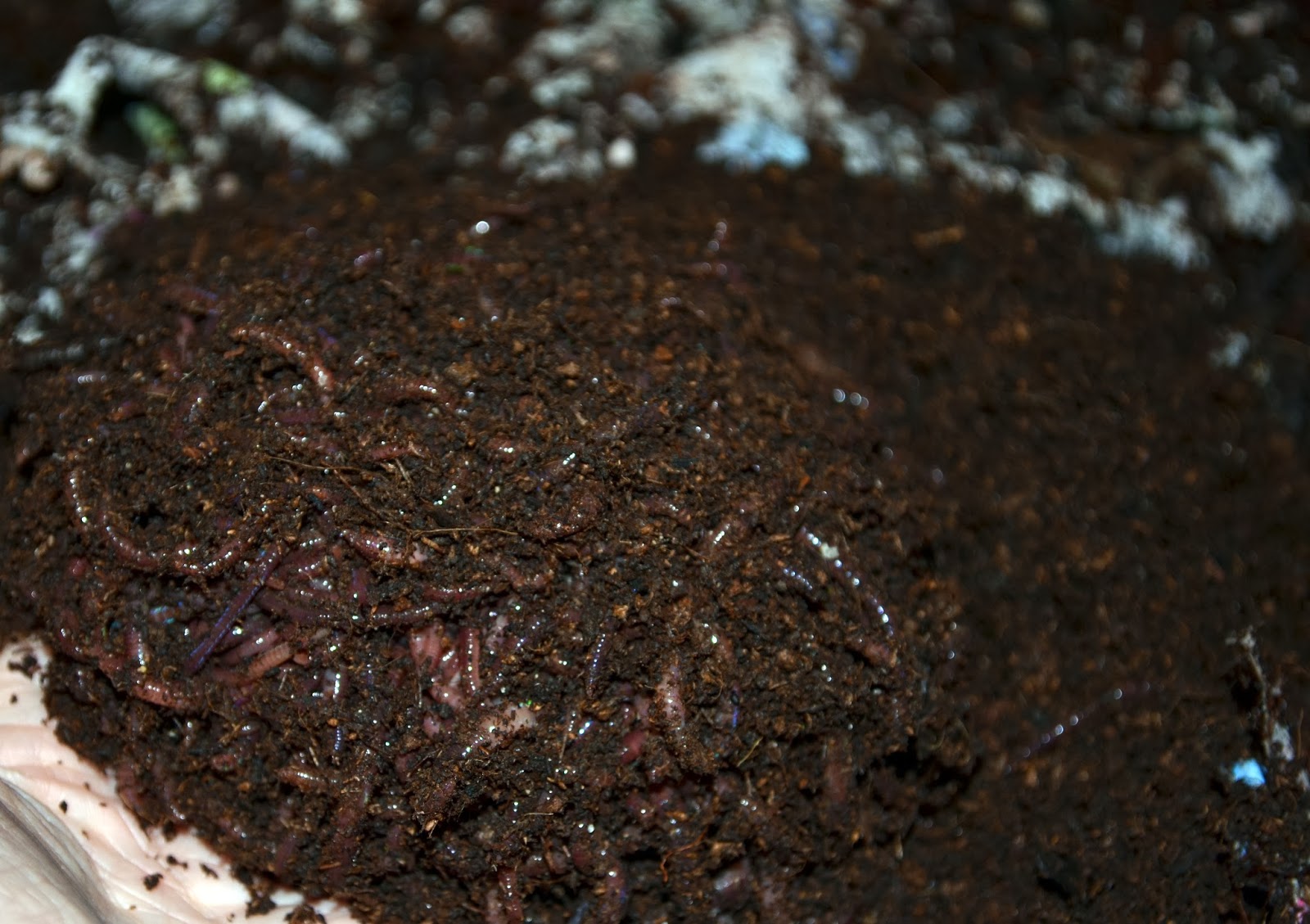
Even with all of the rookie mistakes, they're definitely doing their job. Here's what the bin looked like a couple of weeks ago - 


They're also working on making new baby Snowflakes! Those 2 golden ball thingys are eggs!


Are you vermicomposting? Or are you pretty much horrified by the concept? 


Winter Grown Tomatoes

I love the science behind gardening almost as much as I love the actual act of gardening itself. This year I wanted to try to grow tomatoes indoors to get me through to July, when I'll *hopefully* be harvesting the beginning of the crop for 2014.

I started some "sweet baby girl" tomato seeds indoors about 6 weeks ago, and planted them a couple of days before Christmas. They're in 10 gallon Smart Pots which are filled with my homemade potting mix.


I used coir (a byproduct of the coconut industry), vermiculite, worm castings and rock dust. So far, the plants are looking fantastic, and are starting to set fruit.


In just over a month, I'll be sowing seeds for the spring crop - broccoli, swiss chard, onions, peas and beets! 

Have you started thinking about your 2014 garden yet?


Garden Fail

It's been said that Thomas Jefferson kept detailed notes about his successes and failures in his garden at Monticello. It's also been said that he was one of the only gardeners to admit to as much failure as he had. Drought was often the cause of crop failure, at least according to A Rich Spot of Earth, a book about Jefferson's garden at Monticello (which is one of my favorite places to be).

So in honor of TJ, here's a post about a whole bunch of garden fail.

The past few weeks have been unseasonably cold. Our normal last frost date is April 15, and yet we got a frost a few days ago (late April). The last 2 years have had very warm springs, and one could say I was spoiled by how warm the springs were.

This year, I set out my tomatoes on April 9, very early. I started them early, so they were monsters and needed to go outside. The same goes for my peppers.

Well, let's just say that I learned a very important lesson in gardening this year. A late frost handed me my hat, so to speak. About 10% of my crop suffered frost damage, and I lost a couple tomato plants.


On top of that, at the beginning of the month, we had above average temperatures. Temps were well into the  high 80s - low 90s for almost an entire week, which caused my broccoli to button. (Buttoning is when broccoli forms a small head, much like a floret.) So I'll try broccoli again in the fall when things cool down.


Thomas Jefferson said the success of one crop outdid the failure of another. I purchased a few starts to replace the ones I'm going to lose due to frost damage, and am keeping them inside at night until early next week. Here's hoping that I have some successes in the garden this year to outweigh the loss of the broccoli and tomatoes.


Busy Busy!


The past few weeks have been very busy here at BLT. I've been processing lots of Easter orders and taking care of 100+ baby plants. So I haven't had much free time to update the blog.

Rainbow eggs have been very popular this year


In my last post, my tomatoes were just coming up. I've since had to rethink my garden plan for this year because some tomatoes didn't do what I thought they would.

(The Giant Sauce, for example. Slow, poor germination and weak plants. I wanted 4 for the garden, but am probably only going to wind up with 2. The spoon tomatoes had some leaf curl, so I lost all but 1 of them. The surviving plant is looking great, though!)

Spoon tomato 

In the last 4 weeks, the plants have seriously shot up, though some varieties more than others. The sweet million is getting a little big for its britches, so it is going to lose those branches when I plant it in the garden. The whole stem will get buried with just the top bit sticking out of the soil. Tomatoes grow roots along their entire stem, so the stem can be buried when you plant.

Sweet Million (Cherry)
  

Spoon tomato


Peppers and tomatoes


Swiss chard


A lot of the tomatoes are already producing suckers, too!


The peas are coming up really well in the garden (I'd have pics, but it's raining). I also planted beets, radishes and arugula (again, pics are forthcoming in drier weather).

I'm also working on something new for the shop! Become a fan on Facebook for a sneak peek!

A Stroll Through the Garden


And by garden, I mean "my dining room".

3 short days ago, I sowed my most exciting crop yet - the crop I've been waiting months for. TOMATOES!


I sowed about 14 or so different varieties  along with some purple basil, mammoth basil, rainbow swiss chard, and a few different kinds of flowers. They were started on a heat mat set at 80* and under lights.

3 days later I saw this:


That was in the morning. I went about my daily routine, and by lunch time, saw this:


They've been coming up like gangbusters ever since, which is incredibly exciting. As soon as they have their first set of true leaves, they'll get their own comfy digs and some food.

I've planted a couple varieties for size that I'm especially excited about - the spoon tomato and the super sauce tomato.

Spoon tomatoes are exactly what they sound like - teeny tiny tomatoes that fit on a spoon.

Spoon tomatoes

Super sauce tomatoes are a new release by Burpee, and are supposed to be enormous. (5" x 6" high)

Super sauce tomato
The super sauce seeds haven't sprouted yet, but the spoon tomatoes have. The seeds were incredibly tiny, and the resulting seedlings are tiny, too.


The peppers are starting to get their 3rd set of true leaves.


And the broccoli has been hardening off for 4 days now. I'm hoping to get it in the ground in the next week or so. Granted, it would have to stop raining / snowing for longer than 20 minutes for that to happen.


What do you have started in your garden?


The Songs Have Started

There is a boggy area in my backyard right next to my garden. Every year, winter snow and rain fills the bog. In the spring, toads frolic to my backyard to make lots of wee toad babies. (Did you know that about 80% of male toads return to the place where they were spawned during mating season?) Their croaking starts gently, and by the time spring is in full swing, it's incredibly loud. 


Toad hanging out in my garden.

Bog

When the songs start, I know spring is coming. I took said songs as a sign to build a row cover / small hoop house. It's covered in 6 mil plastic for now, and when it heats up outside the plastic will be replaced with tulle.

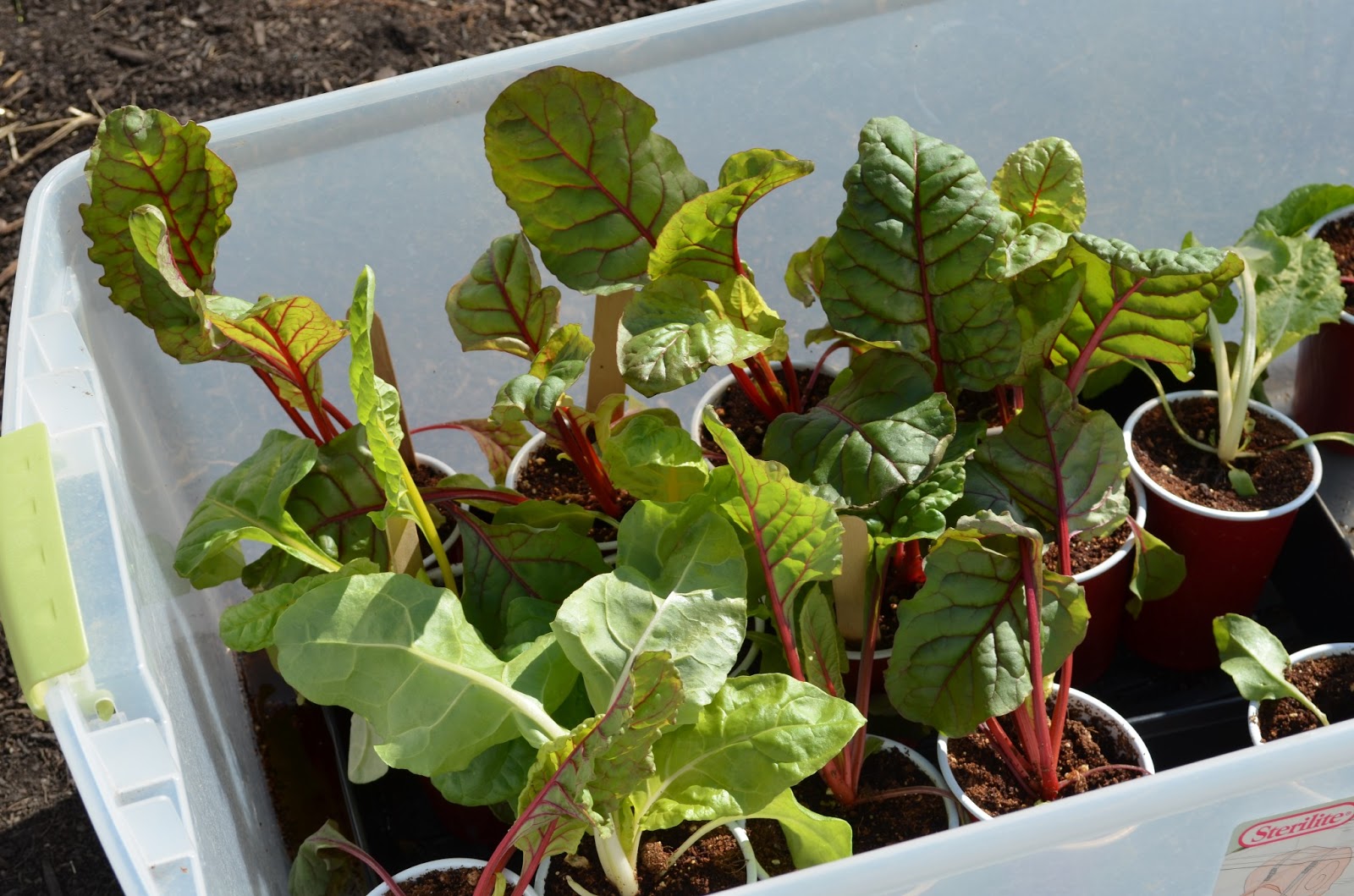
I bought an outdoor thermometer to monitor the temperature, and it was 80*F under the cover. Our 10 day forecast is pretty mild, so I decided to take a chance and planted my swiss chard today. It has been hardening off for a little over 2 weeks.

5.5 week old swiss chard ready for the garden

The row cover - PVC frame covered in 6 mil plastic sheeting


One of the really cool things about chard is that the roots are the same color as the leaves.

Yellow swiss chard


My goal this year is to grow 500 pounds of food for my family. So far, I'm at 4 ounces (I harvested my basil plants for a lasagna). I have 16 chard plants under the row cover, and sowed spinach, arugula, and radishes.

Swiss chard planted

Do you like swiss chard? Is the weather hospitable enough for you to get gardening?